Retro Bauhaus: Elevating Design with Seamless Geometric Patterns
In the ever-evolving landscape of graphic design, few movements have left as indelible a mark as the Bauhaus. Originating in early 20th-century Germany, this school of thought revolutionized art, architecture, and typography by championing the idea that form should follow function. Today, we see a vibrant resurgence of this aesthetic, often referred to as Retro Bauhaus. It is not merely a nostalgic nod to the past but a practical, versatile design language that speaks to modern sensibilities. For creators, business owners, and digital artisans, integrating Retro Bauhaus elements into their work offers a unique blend of historical prestige and contemporary minimalism.
The Enduring Appeal of Geometric Minimalism
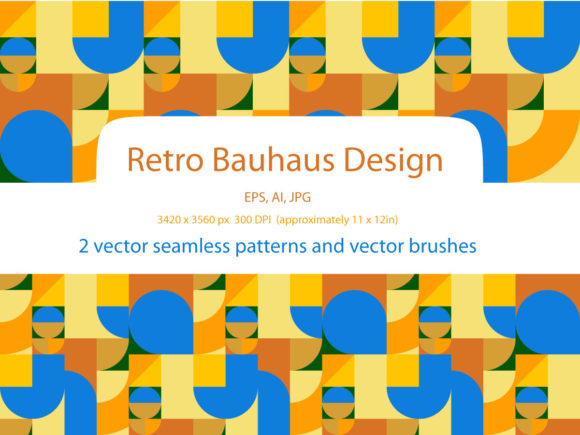
At its core, the Bauhaus style is defined by its rejection of ornamentation in favor of geometric clarity. When we talk about Retro Bauhaus in the context of digital assets, we are referring to patterns that utilize bold shapes—circles, squares, triangles, and lines—arranged in harmonious, often asymmetrical compositions. These designs are characterized by a limited but striking color palette, typically featuring primary colors like red, blue, and yellow, contrasted against stark blacks, whites, or muted earth tones.
Why does this style resonate so strongly today? In an era of information overload, the clean lines and structured layouts of Retro Bauhaus provide visual relief. They offer a sense of order and sophistication without being overly complex. For professionals seeking to communicate clarity and innovation, these geometric vector backgrounds serve as an ideal foundation. Whether used for branding, web design, or print media, the inherent simplicity of the style ensures that the message remains the focal point, while the design provides a compelling, artistic frame.
Versatility Across Mediums: From Digital to Physical
One of the most significant advantages of utilizing a high-quality set of seamless Retro Bauhaus patterns is their incredible versatility. Because these designs are rooted in fundamental geometry, they translate exceptionally well across various mediums. Consider the following applications where these patterns can add substantial value:
- Digital Scrapbooking and Card Making: For hobbyists and professional crafters, digital printable paper offers endless creative possibilities. The seamless nature of the patterns allows users to tile them indefinitely, creating custom backgrounds for digital layouts that look cohesive and professional.
- Fabric and Cloth Design: The repetitive, tileable structure of these vectors makes them perfect for textile printing. Imagine a tote bag, a cushion cover, or even a fashion garment adorned with crisp, geometric motifs. The scalability of the files ensures that the pattern remains sharp, whether printed on a small patch or a large bolt of fabric.
- Packaging and Wrapping Paper: In retail, packaging is a silent salesman. Using Retro Bauhaus inspired wrapping paper or box designs can elevate a product’s perceived value. The clean, modern aesthetic appeals to consumers who appreciate minimalist design and sustainability, as the simple ink coverage often aligns with eco-friendly printing practices.
- Web Page Backdrops and Banners: For web designers, finding background textures that do not distract from content is a challenge. These geometric vector backgrounds provide subtle texture and visual interest without overwhelming the user interface. They are particularly effective for tech startups, architectural firms, and design portfolios.
- Greeting Cards and Posters: The bold visual impact of Bauhaus geometry makes it ideal for statement pieces. A greeting card with a striking geometric pattern can convey modern elegance, while posters benefit from the dynamic energy of asymmetrical layouts.
Technical Specifications and File Formats
When investing in digital design assets, understanding the technical specifications is crucial for ensuring compatibility and quality. A premium collection of Retro Bauhaus patterns typically includes a variety of file formats to cater to different workflows. For instance, receiving scalable EPS and AI patterns is essential for professional designers using Adobe Illustrator. These vector formats allow you to fill any object in any dimension without losing resolution. This means you can scale a pattern from a tiny icon to a massive billboard, and the lines will remain crisp and clean.
Additionally, high-resolution JPG images are invaluable for quick implementation in software that does not support vector editing, such as certain photo editors or word processing programs. With a resolution of 300 DPI and dimensions of approximately 12 x 12 inches (3420x3560px), these raster files are print-ready, ensuring that physical outputs like scrapbook pages or greeting cards maintain their clarity and vibrancy.
A notable feature of high-quality collections is the inclusion of bonus geometric elements and vector pattern brushes. These tools empower users to customize the patterns further, breaking the grid or adding unique accents to their designs. Having these elements in both AI and EPS formats ensures that regardless of your preferred software version, you have the flexibility to edit and adapt the assets to your specific needs.
Practical Considerations for Creators
While the aesthetic appeal of Retro Bauhaus is undeniable, practical considerations must guide its application. First, it is important to note that these are digital downloads. No physical product will be shipped, and mockups are generally not included. This means that buyers must have the necessary software and technical knowledge to utilize the files effectively. For those new to vector graphics, there may be a learning curve associated with editing AI and EPS files. However, numerous online tutorials can bridge this gap, making the technology accessible to motivated beginners.
Another consideration is color management. Since all files are typically provided in RGB color mode, they are optimized for screen display. If you intend to print these patterns, especially for professional commercial purposes, you may need to convert the colors to CMYK to ensure accurate color reproduction. While modern printers handle RGB-to-CMYK conversion reasonably well, being aware of potential shifts in hue—particularly with vibrant blues and reds common in Bauhaus palettes—is wise.
Evaluating Suitability for Your Project
How do you determine if Retro Bauhaus patterns are the right choice for your next project? Ask yourself the following questions:
- What is the tone of my brand or project? If you aim for a playful, modern, or sophisticated look, these geometric patterns are an excellent fit. However, if your brand relies on organic, rustic, or highly ornate aesthetics, the rigid geometry might clash.
- Who is my audience? Design-conscious consumers, millennials, and Gen Z often respond positively to retro-modern trends. If your target demographic values minimalism and artistic heritage, this style will likely resonate.
- What is the medium? These patterns shine in environments where clarity and structure are valued. They are less suitable for projects requiring soft, flowing, or naturalistic imagery.
Real-World Scenarios: Bringing Theory to Life
Let us explore a few real-world scenarios to illustrate the practical utility of these assets. Imagine a small business owner launching a line of artisanal coffees. They want their packaging to stand out on crowded shelves while conveying a sense of modern craftsmanship. By using a Retro Bauhaus pattern as the background for their label, they can create a distinctive look that feels both timeless and contemporary. The geometric shapes can echo the precision of the brewing process, while the bold colors attract attention.
Consider also a digital marketer creating a series of social media banners for a tech conference. The goal is to communicate innovation and structure. Using a seamless geometric vector background allows the marketer to create a consistent visual theme across all platforms. The scalability of the vector files ensures that the graphics look sharp on both mobile devices and large desktop monitors. Furthermore, the ability to edit the colors in the AI files allows the marketer to align the patterns perfectly with the conference’s branding guidelines.
For a teacher or educational content creator, these patterns can be used to design engaging worksheets or presentation slides. The clear, distinct shapes help in organizing information visually, making complex data easier to digest for students. The Retro Bauhaus style adds a layer of intellectual credibility and visual interest that standard clipart simply cannot match.
Conclusion: Investing in Timeless Design
Incorporating Retro Bauhaus elements into your creative toolkit is more than just following a trend; it is an investment in a design language that has proven its worth over a century. The combination of historical significance, aesthetic versatility, and technical flexibility makes these seamless patterns an invaluable resource for a wide range of users. From the digital scrapbooker looking to add a touch of elegance to their layouts, to the professional designer crafting high-impact branding materials, the utility of these assets is undeniable.
By understanding the features, limitations, and best practices associated with these geometric vector backgrounds, you can maximize their potential in your projects. Remember, the key to successful design lies not just in the tools you use, but in how you apply them to solve problems and communicate ideas. With a comprehensive set of Retro Bauhaus patterns, you have the freedom to experiment, innovate, and create works that are both visually stunning and functionally effective. As you embark on your next creative endeavor, consider how the clean lines and bold shapes of this iconic style can help you achieve your design goals with clarity and confidence.